Complete Guide to Dental Implants in Santa Rosa, California
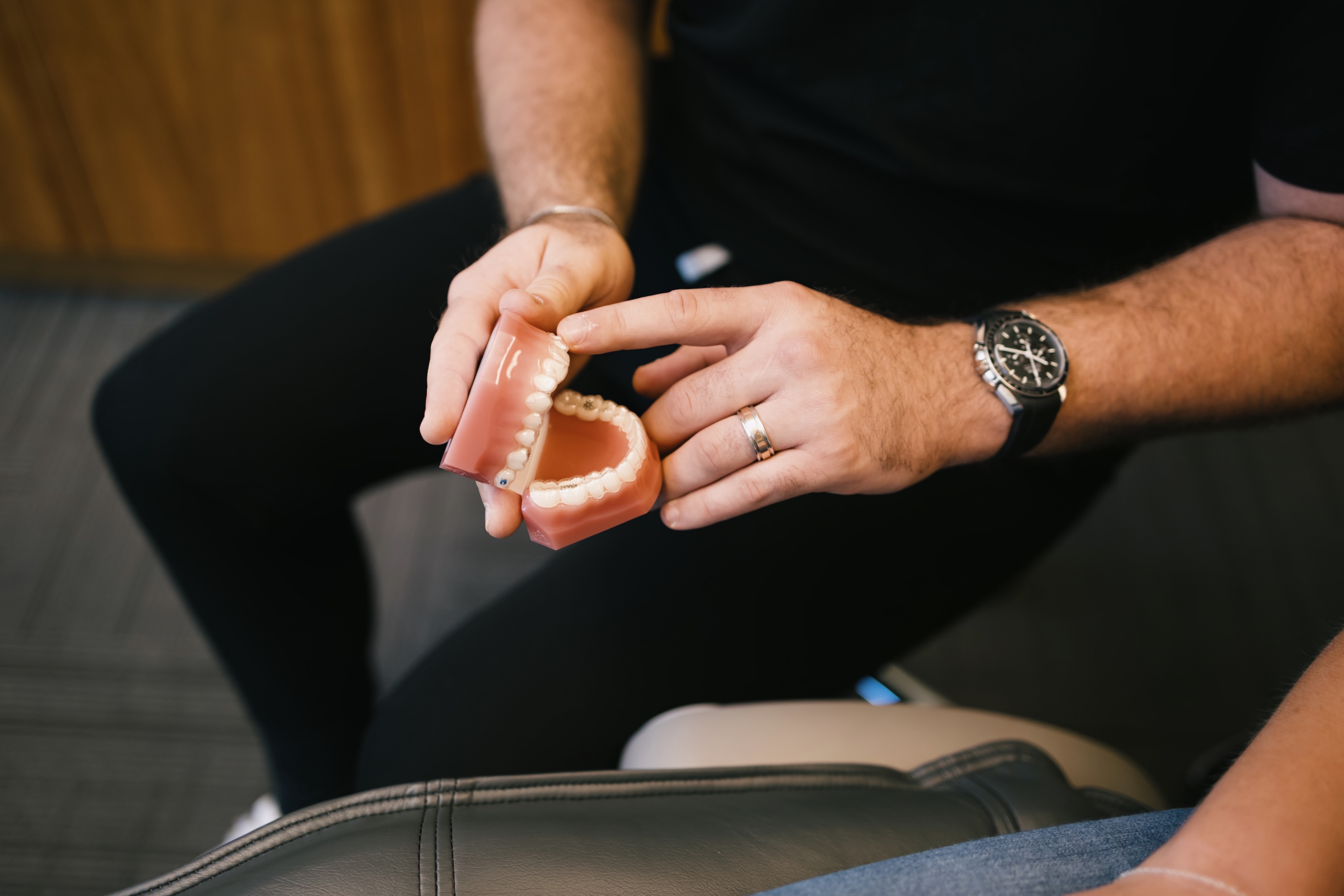
Dental implants are titanium posts that we surgically place into your jawbone to replace missing tooth roots. Through a natural process called osseointegration, the titanium fuses directly with your bone tissue, creating a stable foundation for a replacement tooth. This integration allows implants to preserve bone density and distribute chewing forces naturally.
At Santa Rosa Dental Suite, Dr. William Plaugher has extensive experience placing dental implants for patients throughout Sonoma County. The implant process requires careful planning, precise technique, and adequate healing time. While treatment timelines vary based on individual circumstances, the process typically takes several months from start to finish.
This guide provides comprehensive information about dental implant treatment, but every patient's situation is unique. We encourage you to continue reading to learn everything you need to know about dental implant treatment in Santa Rosa.
Quick Overview
- Dental implants are titanium posts surgically placed into the jawbone to replace missing tooth roots and support crowns, bridges, or dentures.
- The complete process typically takes three to six months, allowing time for the implant to integrate with your natural bone tissue.
- Implants preserve your jawbone density and function like natural teeth when properly maintained with good oral hygiene.
- Treatment planning involves comprehensive imaging and evaluation to determine if you're a good candidate for implant placement.
- With proper care and regular dental visits, dental implants can provide a long-term solution for missing teeth.
What Are Dental Implant Materials and Components?
Every dental implant system has three main parts that work together to replace your missing tooth. The implant serves as your foundation, the abutment connects the pieces, and the crown is the visible tooth you see and use.
The implant itself is a titanium screw that goes into your jawbone. We choose the size based on your bone density and the location in your mouth. Titanium has unique biocompatible properties that make it ideal for dental implants—your bone actually grows into the microscopic surface through osseointegration, creating a strong bond with your jawbone.
The abutment connects the implant to your crown and comes in different materials depending on your needs. Titanium abutments are most common, while zirconia abutments offer better aesthetics in the front teeth where the gum line might show. Custom abutments allow us to shape the emergence profile for optimal gum health.
The crown represents the visible part of your tooth and can be made from several materials:
- Porcelain-fused-to-metal: Offers strength and reasonable aesthetics for most situations
- All-ceramic: Provides the most natural appearance, especially for front teeth
- Zirconia: Combines excellent strength with good aesthetics, making it popular for back teeth where chewing forces are highest
Modern implants feature specially treated surfaces—either sandblasted and acid-etched or with special coatings that promote bone growth. These advances have improved outcomes significantly compared to the smooth implants used in earlier decades.
How Does the Complete Dental Implant Procedure Work?
Your implant process begins with comprehensive planning using our cone beam CT scanner to evaluate your bone density, nerve locations, and sinus positions. This three-dimensional imaging lets us place implants with precision and avoid complications; we also take impressions and photographs to plan the final restoration.
Your treatment follows a systematic approach:
- Initial consultation and planning phase: CT scans, impressions, and digital treatment planning ensure precise placement. We evaluate your medical history, current medications, and discuss your goals.
- Surgical placement day: We make a small incision and create a precise opening in your bone using specialized drills at specific speeds to prevent overheating. The implant is placed with precise torque measurements.
- Healing period: Three to six months for osseointegration to occur. We provide a temporary restoration if needed for aesthetics.
- Restoration phase: Custom abutment and crown placement to complete your new tooth, with careful attention to bite alignment and aesthetics.
How Long Does Recovery Take?
You'll likely experience minimal discomfort after implant placement, often describing it as less painful than a tooth extraction. We recommend taking 600-800mg of ibuprofen before the numbness wears off and continuing it every 6-8 hours for the first 2-3 days to manage inflammation. Ice packs applied for 15 minutes on, 15 minutes off during the first 24 hours help minimize swelling.
Here's what to expect during recovery:
- Days 1-3: Soft foods only, gentle rinsing with warm salt water, avoid the surgical site when brushing
- Days 4-7: Gradually introduce more solid foods, return to normal brushing with soft bristles
- Weeks 2-4: Most discomfort resolves, avoid hard or sticky foods that could disturb the site
- Months 1-3: Bone integration occurs, periodic check-ups to monitor healing
We provide detailed post-operative instructions and are available 24/7 for any concerns during your recovery period.
Understanding Dental Bridges and Implants
Both dental bridges and implants can replace missing teeth, but they work differently. A dental bridge requires preparing the teeth on either side of the gap to support the replacement tooth. This means removing some healthy tooth structure from these adjacent teeth to place crowns that will hold the bridge in place.
Dental implants replace the tooth root with a titanium post placed directly into the jawbone, then attach a crown to that post. This approach doesn't require any changes to your neighboring teeth.
Important considerations for each option:
- Treatment timeline: Bridges can typically be completed within a few weeks, while implants require several months for the bone to integrate with the implant
- Impact on other teeth: Bridges require reshaping adjacent healthy teeth, while implants preserve your natural teeth
- Daily care: Bridges need special cleaning tools to reach underneath, while implants are cleaned like your natural teeth
- Bone health: Implants help maintain jawbone density, while bridges don't provide this stimulation
- Long-term maintenance: Both options require regular dental care, though they have different maintenance needs over time
The best choice depends on your specific situation, including the health of your adjacent teeth, your bone density, and your personal preferences. We'll evaluate all these factors during your consultation to help you make an informed decision about your dental treatment.
When Do I Need Bone Grafting Before Implants?
When you lose a tooth, the surrounding bone begins to remodel and shrink. Without the tooth root to stimulate the bone, the area gradually loses width and height. If significant time has passed since tooth loss, there may not be enough bone to support a standard implant. Bone grafting rebuilds this foundation to create adequate support for your implant.
Common bone grafting procedures we perform at Santa Rosa Dental Suite include:
- Socket preservation: Placing graft material immediately after extraction to maintain bone dimensions until implant placement
- Ridge augmentation: Rebuilding lost bone width using specialized grafting techniques
- Sinus lifts: Adding bone height in the upper back teeth area where the sinus cavity may limit implant placement
- All-on-4 technique: Strategic angled placement that may eliminate the need for grafting in some cases
Bone graft materials include your own bone (autograft), donor bone (allograft), animal-derived bone (xenograft), or synthetic materials. Healing time varies depending on the graft size and type. When proper protocols are followed, grafted sites can provide excellent support for dental implants.
Am I Too Old for Dental Implants?
Age alone does not determine candidacy for dental implant treatment. Your overall health, bone quality, and ability to maintain oral hygiene are more important factors than your chronological age when evaluating implant suitability.
Important considerations for older patients include:
- Healing capacity: May be slower but remains predictable in healthy individuals
- Medication interactions: Blood thinners, bisphosphonates, and other medications require coordination with your physician
- Manual dexterity: Ability to maintain proper oral hygiene around implants
- Realistic expectations: Understanding the time commitment and healing process involved
Medical conditions such as well-controlled diabetes, heart disease, and osteoporosis require special consideration but do not automatically prevent implant treatment. These conditions may require modified treatment protocols or coordination with your physician. Heavy smoking significantly increases the risk of implant failure and may affect your candidacy for treatment.
What Are All-on-4 Dental Implants?
All-on-4 treatment provides a complete arch of teeth supported by four strategically placed implants. This approach works well for patients who are missing most or all of their teeth in one arch. The back implants are angled to avoid anatomical structures like sinuses and nerves while maximizing contact with available bone.
Key features of All-on-4 treatment:
- Same-day function: Temporary teeth can often be placed the same day as implant surgery
- Streamlined treatment: The process typically takes several months to complete
- Efficient approach: Uses fewer implants than replacing each tooth individually
- Strategic placement: Angled positioning may reduce the need for bone grafting procedures
- Functional restoration: Designed to restore normal eating and speaking abilities
We perform All-on-4 procedures using IV sedation for patient comfort. Recovery time varies by individual, and we'll discuss what to expect during your consultation at Santa Rosa Dental Suite.
What's the Difference Between Mini and Traditional Implants?
Mini implants have a smaller diameter than traditional implants and serve different purposes in dental treatment. They're primarily used to stabilize lower dentures and can often be placed through the gum tissue without requiring surgical incisions.
Key differences between mini and traditional implants:
- Size: Mini implants are narrower in diameter than traditional implants
- Placement procedure: Mini implants can often be placed without surgical incisions, while traditional implants typically require surgical access
- Healing time: Mini implants may allow for immediate use in some cases, while traditional implants require a healing period for bone integration
- Applications: Mini implants are primarily used for denture stabilization, while traditional implants can support individual crowns, bridges, and dentures
- Strength: Traditional implants can handle greater chewing forces than mini implants
Traditional implants are typically recommended for replacing individual teeth or supporting bridges due to their strength and durability. Mini implants serve a specific role in helping stabilize dentures when traditional implants may not be suitable for a patient's particular situation.
How Do I Care for My Dental Implants?
Implant maintenance focuses on preventing peri-implantitis, an inflammatory condition similar to gum disease that can progress if left untreated. Daily brushing and flossing remain essential, along with professional cleanings every few months.
Recommended care tools include:
- Soft-bristled electric toothbrushes: Gentle yet effective cleaning without scratching implant surfaces
- Water flossers: Excellent for removing bacteria from hard-to-reach areas around implants
- Antimicrobial rinses: Additional protection against harmful bacteria
- Implant-specific floss: Designed with stiffer ends for threading under bridges
Regular dental visits allow us to monitor your implants and catch any problems early. We check restoration stability, evaluate tissue health, and take periodic X-rays to assess bone levels. With proper care, dental implants can provide long-term function and aesthetics.
Ready to Learn More About Dental Implants?
If you're considering dental implants in Santa Rosa, we understand this is an important decision. Dr. William Plaugher and our team take time to evaluate your specific situation, discuss all your options, and answer your questions thoroughly.
We believe in helping patients make informed decisions about their dental health. Whether you're exploring treatment options or ready to move forward, we're here to guide you through the process. Contact us to schedule your consultation at Santa Rosa Dental Suite.
Contact Us
Call or text us at 707.544.2696, or request an appointment online. We'll be in touch soon.